English
 Español de México
 Português
 Français
Gene-targeted
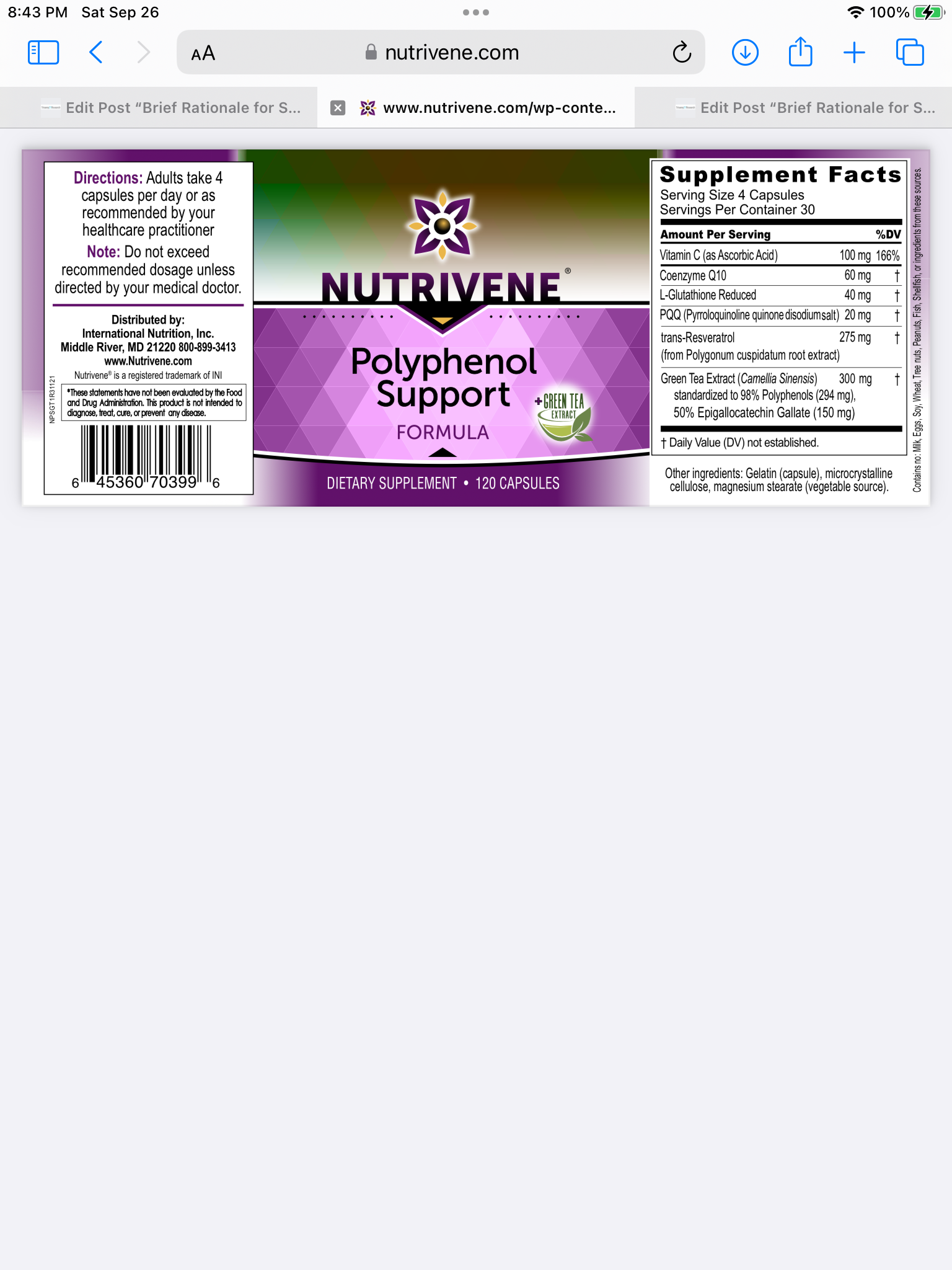
rationale for this Polyphenol Support mix (HSA21 overexpression + downstream pathways). This is the mechanistic story used in TNI; human efficacy remains mixed (small adult EGCG trials suggested cognitive signals; a pediatric EGCG RCT did not).
Green tea extract / EGCG (150 mg) — DYRK1A (and secondarily APP processing / MMP-9).
EGCG is a non-competitive DYRK1A kinase inhibitor. Extra DYRK1A is linked to altered neurogenesis, excitation–inhibition balance, craniofacial patterning, and tau phosphorylation. EGCG is also studied for shifting APP processing and lowering some proteases that degrade NGF.
trans-Resveratrol — APP / mitochondrial network (plus miR-155, which is also on HSA21).
Resveratrol (and related stilbenes) is used to support mitochondrial biogenesis/OXPHOS and reduce APP-related oxidative and inflammatory load in DS cell and mouse models. Polydatin (a related Polygonum compound) has been shown to reset miR-155 targets that control mitophagy and energy metabolism in trisomy-21 fibroblasts.
PQQ + CoQ10 — mitochondrial genes/pathways disrupted by SOD1, APP, and energy-metabolism HSA21 genes (e.g., NRIP1, RCAN1 effects).
PQQ promotes mitochondrial biogenesis; CoQ10 sits in the electron-transport chain. Both are aimed at the chronic mitochondrial deficit and ROS leak typical of DS cells.
Reduced glutathione + vitamin C — SOD1 imbalance.
Extra SOD1 makes extra H₂O₂; GSH and ascorbate support the downstream peroxide-clearing system that is not gene-dosed on chromosome 21, and GSH itself is often low in DS.
Practical note: EGCG can interact with folate metabolism, which is why Nutrivene historically kept green tea out of the main Daily formula and sold it separately. Combine only with clinician oversight, especially if the person is already on high-dose 5-MTHF/B12 from the Daily product.